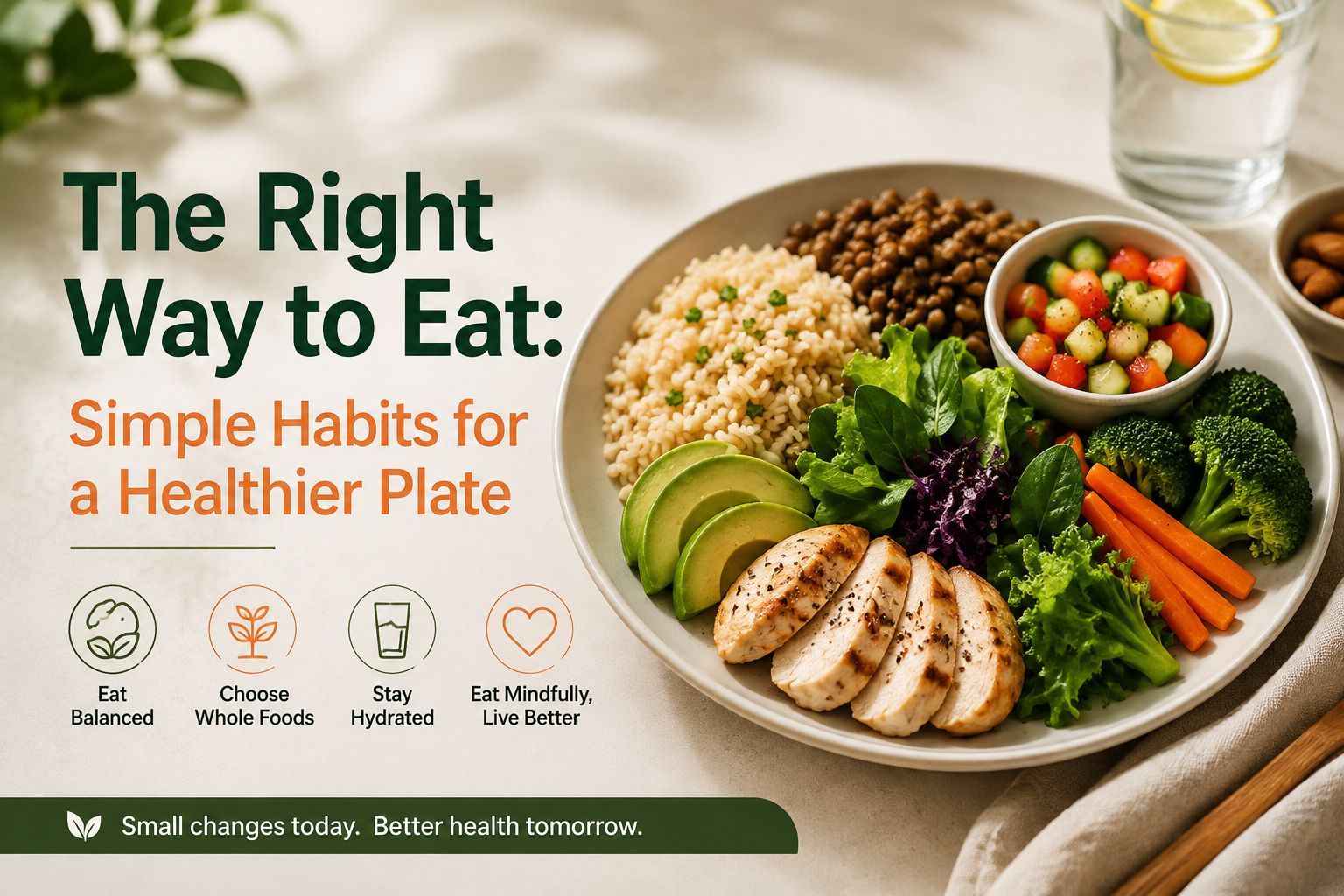
Healthy eating is often presented as a list of foods we should eat or avoid. But healthy eating is not only about what we eat. How we build our plate, how we eat, and even the order in which we eat certain foods can influence our overall dietary quality and metabolic health.
There is no single “perfect diet” that works for everyone. The World Health Organization (WHO) describes a healthy diet using four key principles: adequacy, balance, moderation and diversity. A healthy dietary pattern should provide essential nutrients while limiting excess free sugars, sodium, saturated fats and highly processed foods.
So, what does “eating right” actually look like?
1. Start with a balanced plate
A simple way to improve a meal is to think about balance rather than eliminating carbohydrates or fats.
A healthy plate can include:
- Vegetables and salad - make these a substantial part of the meal
- Protein - pulses, beans, lentils, eggs, fish, poultry, curd or other protein-rich foods
- Whole grains or other quality carbohydrates - whole-wheat roti, brown rice, millets, oats or other minimally processed grains
- Healthy fats - nuts, seeds and appropriate amounts of unsaturated oils
The goal is not to make every meal mathematically perfect. Instead, aim for variety and balance across the day. WHO recommends obtaining carbohydrates mainly from whole grains, vegetables, fruits and pulses rather than relying heavily on refined carbohydrate sources.
2. Make your plate colourful
“Eat a rainbow” is more than an attractive nutrition slogan.
Different coloured fruits and vegetables contain different combinations of vitamins, minerals and bioactive plant compounds. Including green leafy vegetables, orange or yellow vegetables, red and purple produce, and different fruits can increase dietary diversity.
WHO recommends that adults and children over 10 years aim for at least 400 g of fruits and vegetables per day.
Instead of eating the same vegetable every day, rotate your choices. For example:
Green: spinach, beans, broccoli
Orange/yellow: carrot, pumpkin, papaya
Red: tomato, watermelon
Purple/blue: brinjal, purple cabbage, berries
Colour does not mean that every meal needs to contain five different colours. Variety over the week matters.
3. Don't just eat - eat mindfully
Eating while scrolling through your phone, watching television or working can make it easier to lose awareness of how much and how quickly you are eating.
Mindful eating means paying attention to the experience of eatingyour hunger, fullness, taste, texture and pacerather than eating automatically.
Try simple habits:
- Sit down while eating.
- Reduce distractions when possible.
- Eat slowly enough to notice the taste and texture.
- Pause during the meal and ask yourself whether you are still hungry.
- Avoid treating food as something that must simply be “finished.”
Mindful eating should not become another restrictive rule. Its purpose is to increase awareness and improve your relationship with food, not to create guilt around eating.
4. Should you eat protein and fibre first?
This is one of the more interesting areas of nutrition research.
Some studies suggest that eating vegetables or protein-rich foods before carbohydrate-rich foods may reduce the rise in blood glucose after a meal. A systematic review found that eating carbohydrate later in the meal, after vegetables and/or protein, generally produced lower post-meal glucose and insulin excursions in acute studies. [2]
More recent research in healthy adults has also reported lower post-meal glucose responses when vegetables, fruit or protein-rich foods were consumed before carbohydrate-rich foods. However, the studies were generally small and short-term, so this should not be presented as a universal rule or a replacement for an overall healthy diet.
A practical approach could therefore be:
Vegetables → protein → carbohydrate-rich foods
For example, with an Indian meal, you could begin with a vegetable or salad, include dal/beans/curd/egg/fish or another protein source, and then eat your rice or roti.
But remember: the overall composition of the meal matters more than obsessing over the exact order of every bite.
5. Choose fibre-rich foods regularly
Fibre supports digestive health and is associated with several health benefits. Good sources include vegetables, fruits, pulses, whole grains, nuts and seeds.
WHO recommends that people over 10 years consume at least 25 g of naturally occurring dietary fibre per day.
An easy way to increase fibre is to make simple substitutions:
White rice → brown rice or a mixed-grain option
Refined flour products → whole-grain alternatives
Juice → whole fruit
Snack foods → fruit, nuts or roasted pulses
Increase fibre gradually and drink adequate fluids.
6. Think about quality, not perfection
Healthy eating does not mean never eating sweets, fried foods or your favourite foods. It means that these foods should not consistently displace nutritious foods in your diet.
WHO recommends limiting free sugars, sodium, saturated fats and trans fats while emphasizing minimally processed and unprocessed foods.
The better question is not:
“Is this food good or bad?”
Instead ask:
“How often do I eat it, what does it replace, and does my overall diet remain balanced?”
The simple formula for eating right
You don't need a complicated diet plan to begin.
Build a balanced plate.
Add colour and variety.
Include protein and fibre.
Eat mindfully.
Choose minimally processed foods more often.
Enjoy less nutritious foods in moderation.
The “right way” to eat is therefore not about following rigid rules. It is about creating a balanced, diverse and sustainable eating pattern that you can maintain over time.
Small changes repeated consistently are more meaningful than a perfect diet followed for only a few days.
References
World Health Organization. Healthy diet. Geneva: WHO; 2026.
- Sun Y, et al. Ordered eating and its effects on various postprandial health markers: a systematic review. J Am Nutr Assoc. 2023.
- Kim J, Jang EH, Lee S. Effects of meal sequence intervention on blood glucose response in healthy adults: a systematic review. Clin Nutr Res. 2026;15(1):55-63.